Self-Evaluation: a tedious chore, or the route to a better Board?
All too often, the annual Board self-evaluation is viewed as little more than a chore: a questionnaire, a short discussion, a note in the minutes and then business as usual. Done well, however, it is one of the most useful habits a Board can adopt. It helps directors step back from day-to-day pressures, look honestly at how they work together and identify tangible changes that can make a real difference. There are various ways to tackle the self-evaluation:
A survey run by the Company Secretary
A survey run by an external firm using a bespoke platform, such as Harper Webb’s BoardEcho
A discussion led by the Chair or Senior Independent Director following individual conversations.
In this blog we’re looking particularly at questionnaires – how to make them effective, how to ensure the findings translate into action and the pros and cons of using a provider vs doing it yourself.

Why self-evaluation matters
Self-evaluation shouldn’t be about ticking off an item in the Board’s compliance calendar. Rather, it’s an opportunity to explore whether the Board has the right information, relationships, skills, challenge and discipline to help the organisation succeed. A Board can have a detailed strategy, lively meetings and experienced directors, yet still be avoiding difficult issues, receiving information too late, or failing to turn discussion into action. A well-conceived self-evaluation creates space for the Board to notice these patterns and do something before they become risks.
Design the right questionnaire
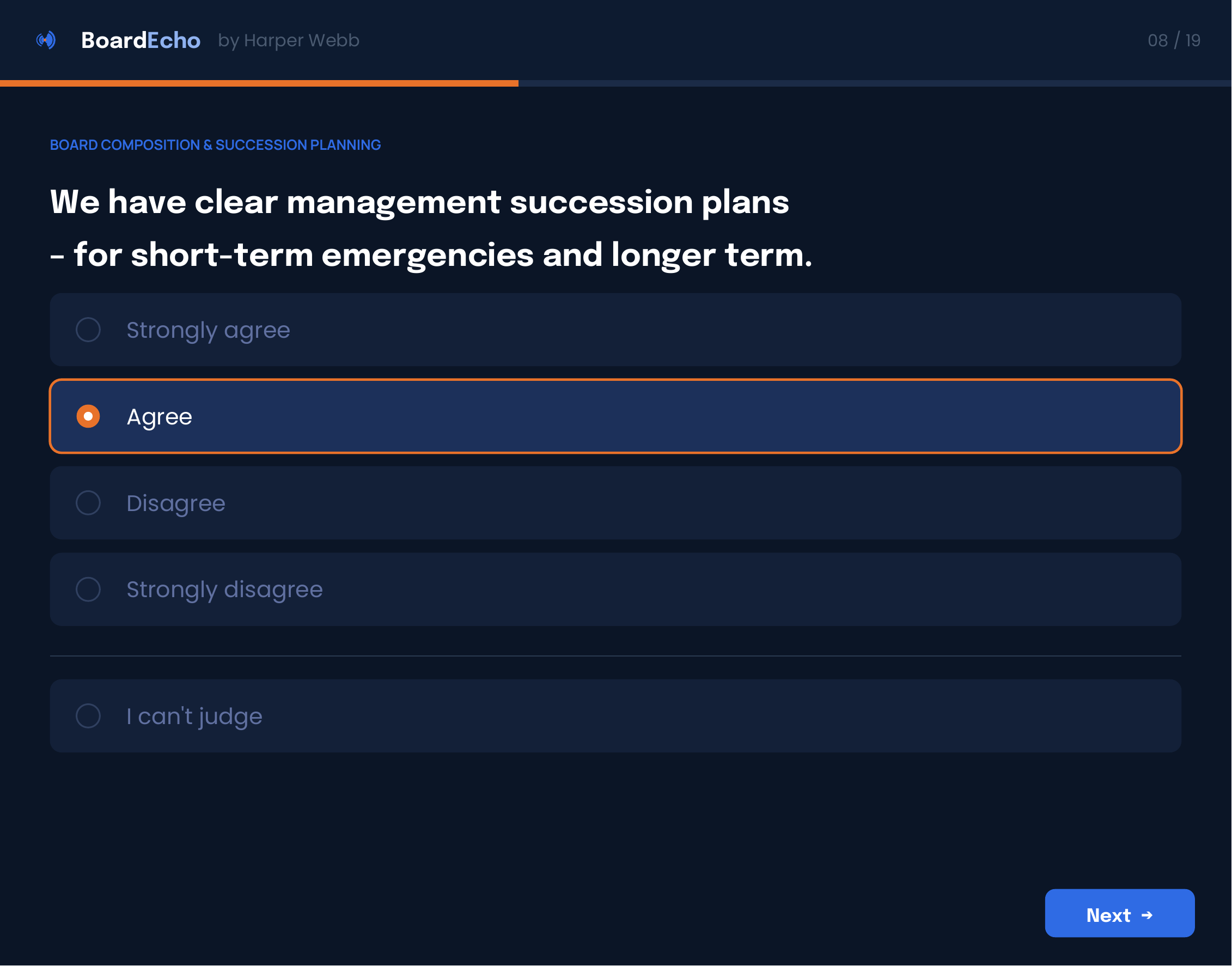
Some questions are standard in any board review questionnaire. You’ll always want to start with the key areas of board effectiveness and you can see these on Harper Webb's model on this page. But every board has its own specific set of challenges and the questionnaire should reflect these. Has there been a leadership change? Has the Board has been overseeing a big project or transaction? Are there new members who are settling in? Is there a need to strengthen a particular committee? And is the Board getting to grips with latest developments in technology and AI?
Once you know what to focus on, it’s easier to come up with questions that will tease out the underlying issues. Good questions go beyond satisfaction ratings. They invite reflection on whether the Board is spending its time on the right issues, adding strategic value, challenging constructively and learning from past decisions. For example:
Do we have a diverse group of members with the skills and experience we need?
Is there a clear set of goals for the CEO and senior team, and do we review their performance rigorously?
Are non-executives constructive and supportive but also giving robust challenge?
Do managers and non-executives work well on agreeing the strategy and monitoring progress towards achieving it?
Are we receiving structured operational and financial reporting that gives a clear picture without excess detail?
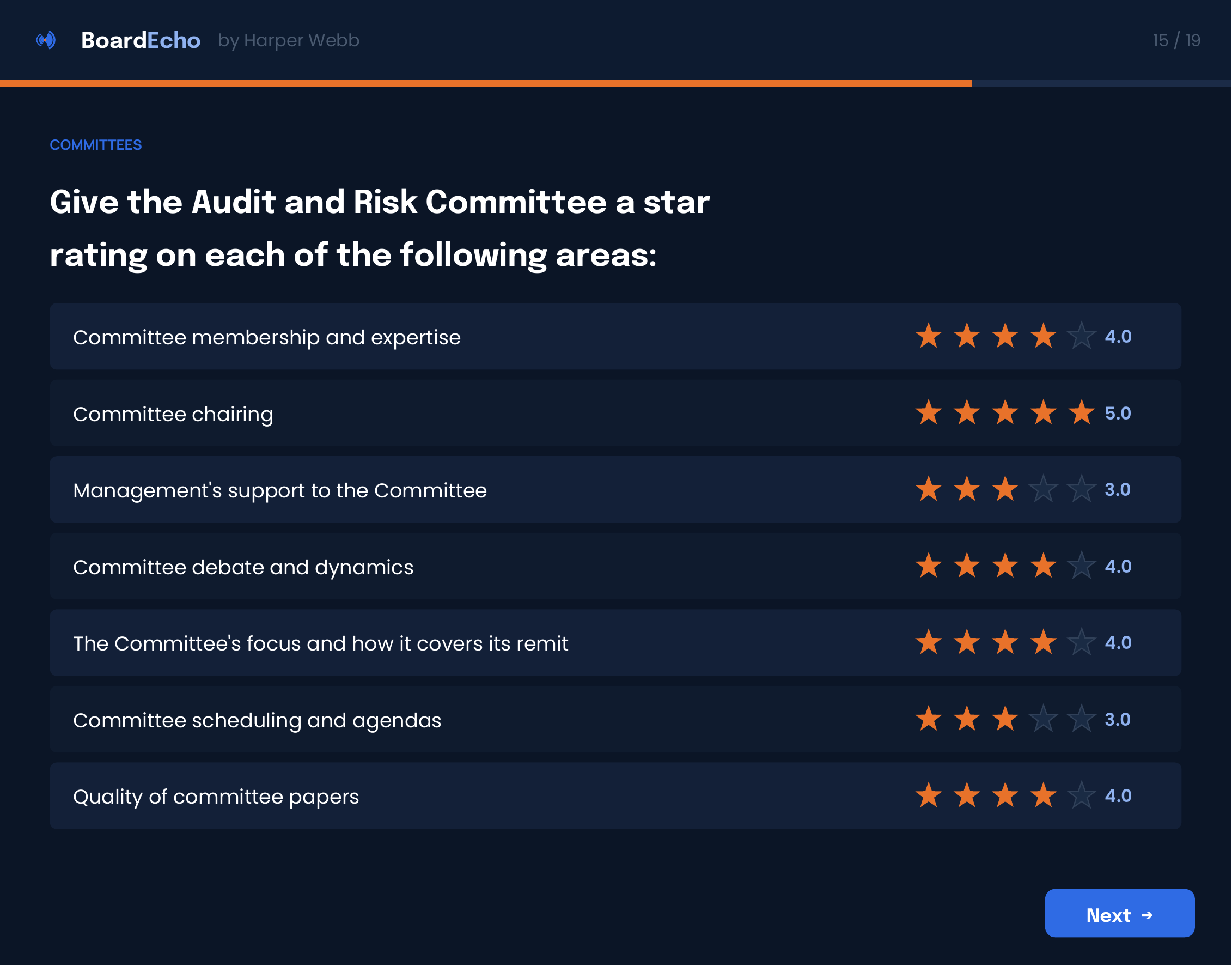
Many company secretaries design their own questionnaires and we are often asked to provide our input. The advantage of using an external firm is that they will already have a suite of questionnaires which form a good basis and ensure you don’t miss anything. For our BoardEcho platform we’ve developed both in-depth and short questionnaires for the Board, its Committees, the Chair and directors.
Encourage thoughtful and honest responses
Self-evaluation is only useful if everyone trusts the process and takes the time to respond thoughtfully. The Chair should set the tone by making it clear the exercise is about looking for actionable improvements rather than exposing shortcomings.
Individual responses should be given in confidence and the findings anonymised to encourage full disclosure. Greater anonymity is provided by using an external firm. Company Secretaries are used to being discreet, but if there’s no external party collating responses, the board members might be guarded in their answers, just in case…
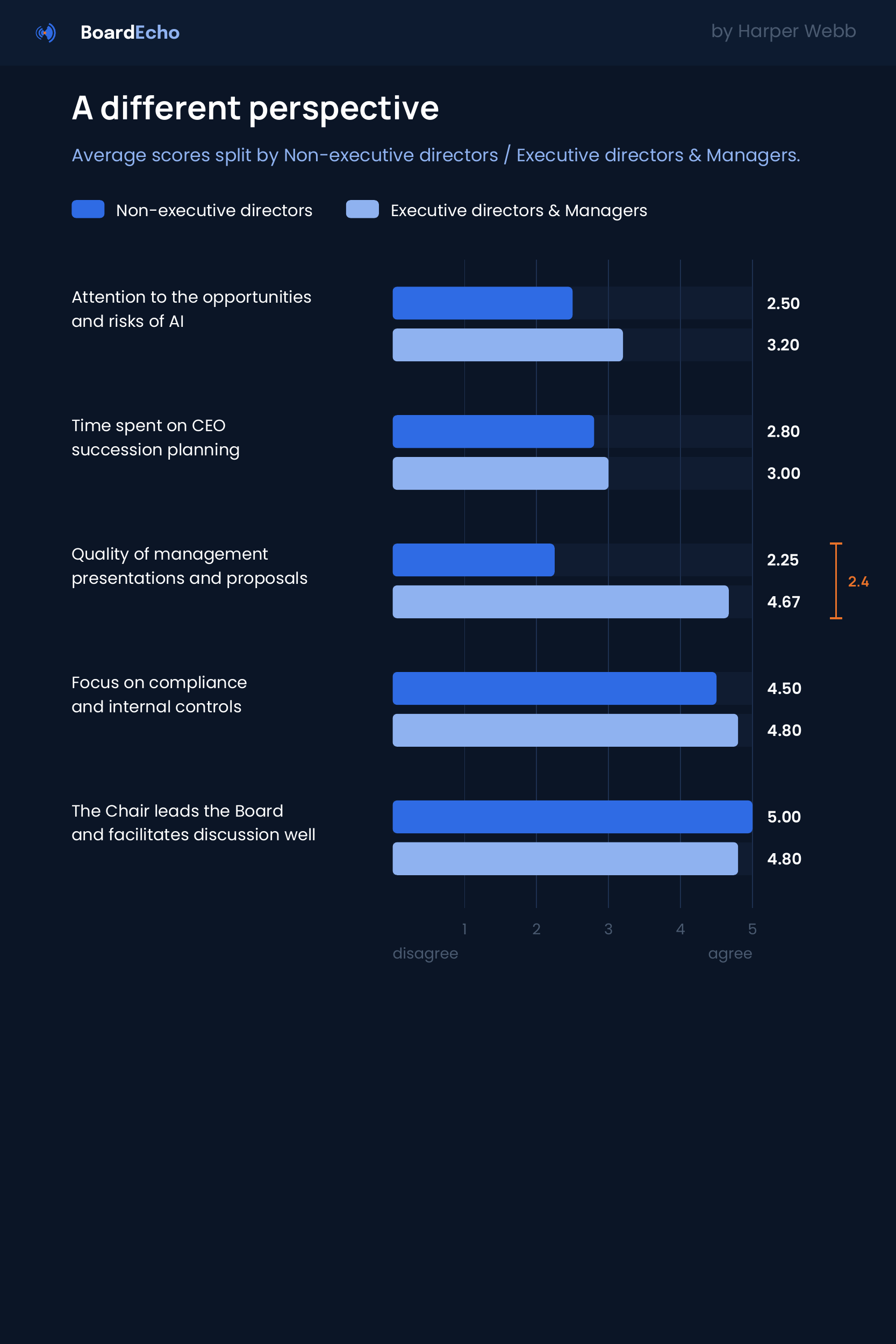
It also helps to include perspectives from beyond the boardroom. Feedback from senior executives can be particularly useful to test whether the Board’s view of itself matches how others experience it. The aim is not to dilute the Board’s ownership of the review, but to strengthen it by avoiding an echo chamber.
Make it convenient to fill in and to analyse the results
One way to encourage a good response is to ensure the survey is straightforward and easy to complete. If you’re running the survey yourself, you can turn to online tools such as Google Forms or Microsoft Forms or use the software provided by some of the larger board platforms. These are readily available but have differing levels of functionality with some more user-friendly than others. And generic tools like these often don’t allow for much analysis of the data beyond creating a simple bar chart, making it hard to translate the findings into something that’s actually useful.
While AI can help a lot when used with skill and care, it’s vital to ensure it doesn’t interpret the data badly or even hallucinate. As always when using AI, you need to ensure the data is not leaking outside the company’s perimeter through a commercial AI platform. The raw survey data contains the candid views of directors and that needs to be carefully protected.
However good it is, AI can’t replace the reflection and judgement of an experienced Company Secretary or board reviewer. Using an external firm like Harper Webb means you are drawing on the knowledge and experience of a professional team who can run the whole process, from setting up and distributing the questionnaire to analysing the results and providing a balanced board paper. It also avoids diverting valuable time of the Company Secretary away from other activities.
Turn findings into action
The most common weakness in board evaluation is not the questionnaire; it’s the follow-through. A good process ends with a short, practical action plan. Each action should have an owner, a deadline and success criteria. By revisiting progress during the year, the Board can stay agile, pausing from time to time to reflect, rather than waiting until the next annual review.
Actions might include simplifying board papers, rebalancing the agenda toward strategic priorities, clarifying overlapping committee remits, arranging targeted development for directors, refreshing the skills matrix, or changing how the Chair draws quieter voices into discussion. The right actions will be specific to each Board.
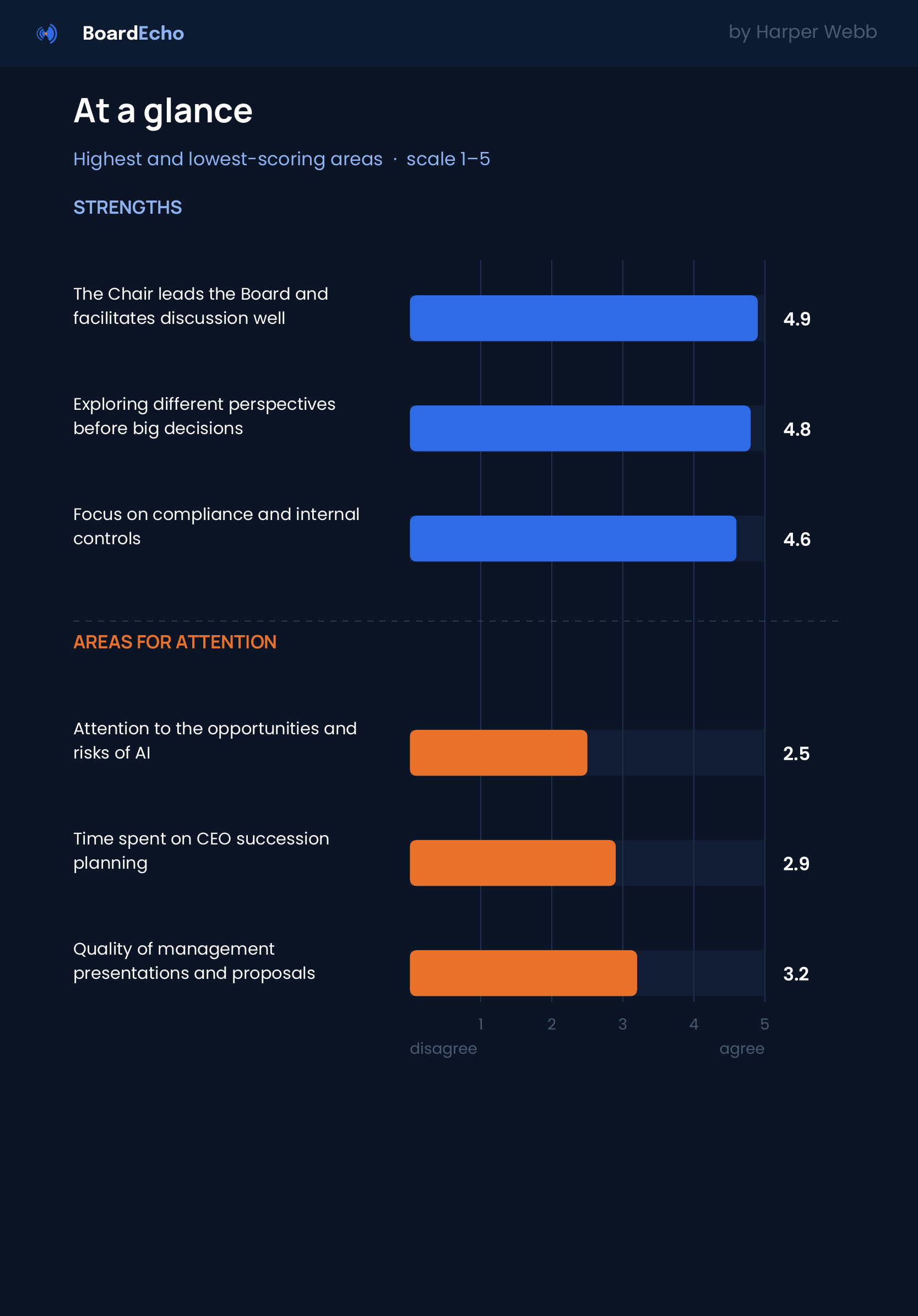
There shouldn’t be too many actions either. It can be easy to come up with a long list of suggestions that are too numerous for the Board or Executive ever to get round to. It’s better to analyse responses carefully and use the Board’s discussion to identify four or five changes that will really make a difference. An external firm can help to identify the main strengths and weaknesses emerging from the report. They can also benchmark the Board to the others they work with, surface issues that are hard to raise internally and strengthen confidence in the process.
Annual self-evaluation should be part of a broader rhythm of continuous improvement. Most boards undertake a full external review every three years, as required by the UK Code of Corporate Governance. Many other codes follow this in the public sector, pensions sector and, most recently, the new CUC code for higher education. At Harper Webb, we offer a range of options to suit every Board. It could be a bespoke questionnaire using BoardEcho, a deep dive into how a committee is working or a full external review. Whether you use a firm like ours or do it yourself, the key is to plan carefully about how you can make your next self-evaluation a genuinely useful exercise, rather than a time-consuming chore to tick a regulatory box.

Get in touch with us to discuss your Board’s evaluation and get a demo of BoardEcho.
Veronica Haidar is a senior adviser at Harper Webb. She has over 9 years’ experience working with the boards of both public and private sector organisations, ranging from utilities and construction companies to insurers and academy trusts.